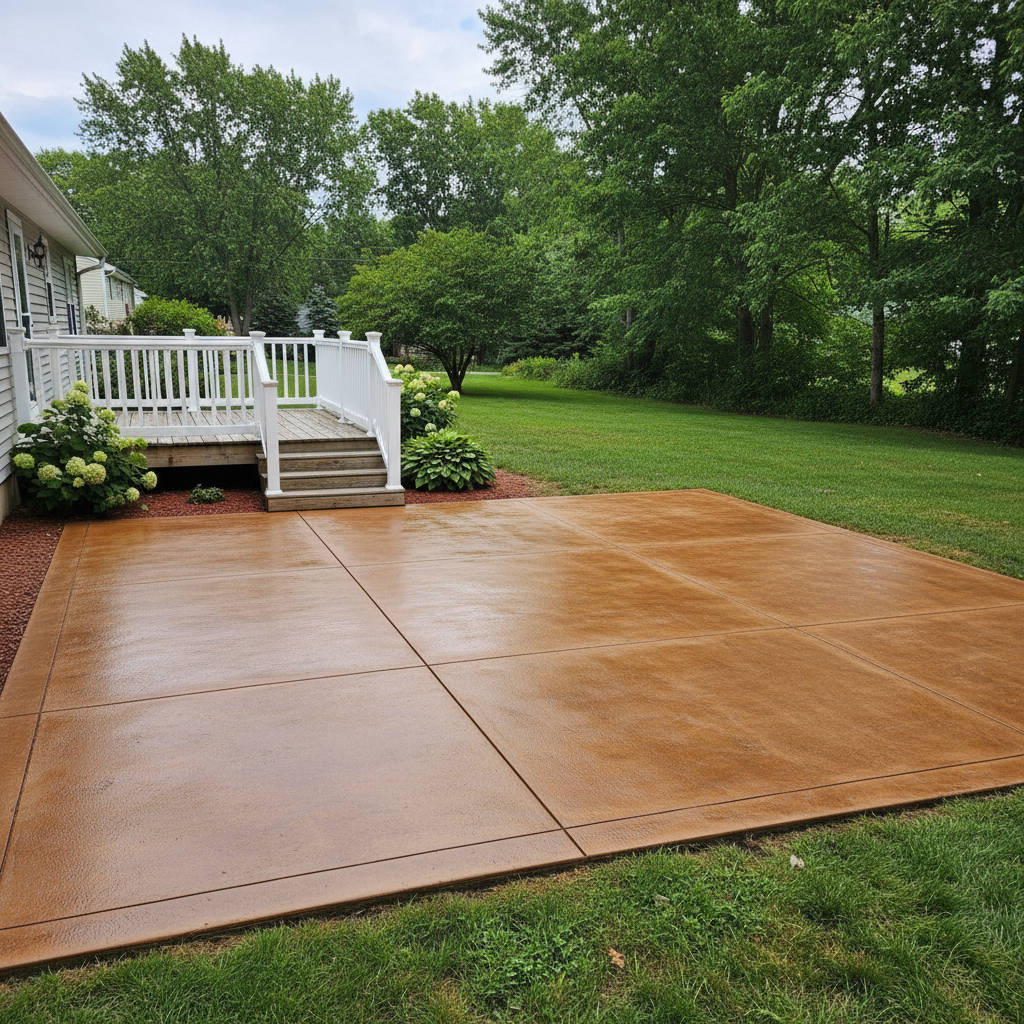
You've got gorgeous stained concrete, right? Maybe it's an interior floor, a patio, or a walkway. Whatever it is, you want it to last and keep that rich color you fell in love with. And you can, but it's not a 'set it and forget it' kind of deal, especially here in Worcester. Our climate, with its brutal winters and humid summers, really puts concrete to the test. Here's what I tell my clients about keeping their stained concrete looking its best.
Extending the Life of Your Stained Concrete
The biggest thing you can do to extend the life of your stained concrete is proper sealing. When we finish a staining job at Concrete Evolutions Co., we always apply a high-quality sealer. This isn't just for looks; it's a protective barrier. That sealer is going to take the brunt of the wear and tear, not the stain itself. Over time, that sealer will degrade, especially in high-traffic areas or spots exposed to direct sunlight and our crazy freeze-thaw cycles. Think about your front walkway in Tatnuck Hill, where it gets blasted with sun and then covered in snow and salt all winter – that sealer is working overtime.
So, what does this mean for you? It means resealing. For interior floors, you might get away with resealing every 3-5 years, depending on traffic. For exterior surfaces, I usually recommend every 1-3 years. You'll know it's time when the surface starts to look dull, or water doesn't bead up on it like it used to. Don't wait until the stain itself starts to fade or chip, because by then, you're looking at a much bigger job than just a reseal.
Another big one is protecting it from harsh chemicals. Things like strong degreasers, paint removers, or even certain fertilizers can strip the sealer and damage the stain. If you're doing any kind of work around your stained concrete, cover it up. And if you spill something, clean it up right away. Don't let it sit.
Regular Maintenance: Keep It Clean
This might sound obvious, but keeping your stained concrete clean is huge. Dirt, grit, and debris act like sandpaper, slowly wearing down that protective sealer. For interior floors, regular sweeping and damp mopping with a mild, pH-neutral cleaner is usually all you need. Avoid harsh detergents or anything with ammonia or bleach; they'll dull or even damage the sealer.
For exterior surfaces, a good rinse with a garden hose and a soft brush can work wonders. If you've got stubborn dirt or mildew (which is common here with our humidity), you can use a pressure washer, but be careful. Keep the nozzle moving and don't get too close, especially if it's an older sealer. You're trying to clean, not strip the finish. A little dish soap mixed with water and a soft brush can often do the trick for tougher spots without risking damage.
And here's a tip for winter: try to avoid using rock salt or de-icers directly on your stained concrete. Many de-icing products can be really tough on sealers and even the concrete itself. Sand is a better option for traction, or look for de-icing products specifically labeled as safe for concrete. Better yet, shovel early and often to avoid ice buildup.
Warning Signs: What to Look For
You've got to be observant. Your stained concrete will tell you when it's not happy. Here are some things to keep an eye out for:
- Dullness or Fading: If the color isn't as vibrant as it used to be, or it looks patchy, that's a clear sign the sealer is wearing thin, or the stain itself is starting to degrade.
- Water Penetration: When you spill water, does it bead up nicely, or does it soak in and darken the concrete? If it soaks in, your sealer isn't doing its job anymore. This is critical for preventing freeze-thaw damage.
- Chipping or Peeling: This is more serious. If you see the surface flaking off, it could be an issue with the sealer application, or the concrete itself is starting to spall due to water intrusion and freezing.
- Cracks: Hairline cracks are pretty common in concrete, especially with our ground freezing and thawing. But if they start to widen, or you see new, larger cracks, that's a structural concern that needs attention.
- White Haze or Discoloration: Sometimes you'll see a white, cloudy film. This can be efflorescence (mineral salts coming to the surface) or moisture trapped under the sealer. It needs to be addressed before it gets worse.
When to Call a Professional
Look, I'm a big believer in DIY when it makes sense. But there are times when you really need to call in the pros. If you're seeing extensive chipping, deep cracks, or significant discoloration that you can't clean off, it's probably beyond a simple reseal. If you've tried cleaning and resealing, and the problem persists, that's another good indicator.
Also, if you're unsure about the type of sealer that was originally used, or if you're dealing with a really large or complex area, it's often better to have someone with experience take a look. We've got the right equipment and knowledge to properly assess the situation, prepare the surface, and apply the right products. Sometimes, what looks like a small problem can be a symptom of a bigger underlying issue with the concrete itself, and you don't want to mess around with that. We're always happy to come out and give you an honest assessment of what your stained concrete needs to stay looking great and protected for the long haul.