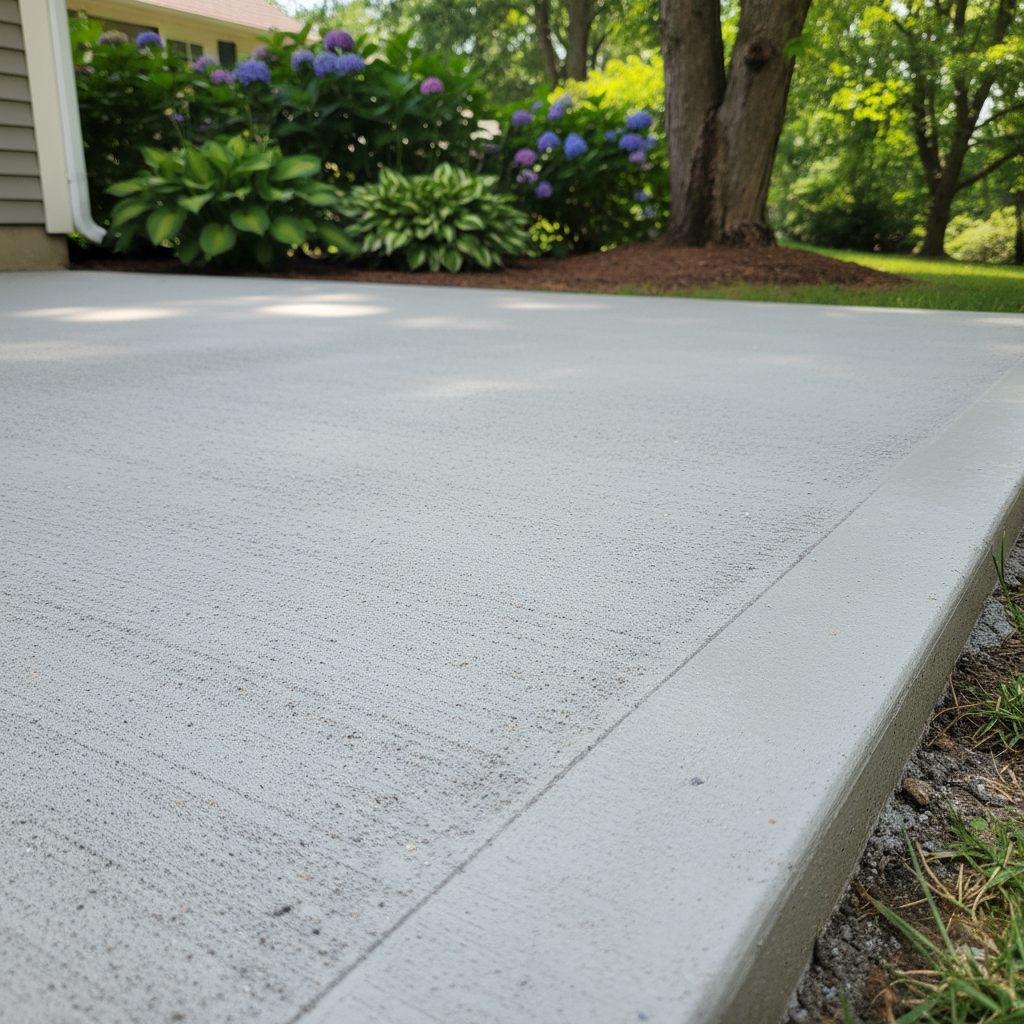
Thinking About DIY Concrete Flatwork? Read This First.
So, you're staring at that cracked walkway or uneven patio, and you're probably thinking, 'I can pour concrete, right?' It's a pretty common thought. Concrete flatwork – stuff like driveways, patios, and sidewalks – looks simple enough on the surface. You mix it up, you pour it out, you smooth it over. But let me tell you, there's way more to it than just that, especially if you want it to actually last longer than a couple of Worcester winters.
I've seen it all in my years doing this work. Some homeowners manage a decent small slab, sure. Others end up with a wavy, cracked mess they then have to pay someone like me to tear out and redo. So, let's talk about what you can realistically tackle yourself, and when it's really time to just pick up the phone.
Before You Even Think About Mixing
Planning is absolutely crucial with concrete. You can't just wing it. Here's what you really need to nail down:
- Permits: Don't skip this step. Seriously. Especially for driveways or anything that might mess with drainage. The City of Worcester has rules, and you definitely don't want to be ripping out a brand new slab because you didn't get the right paperwork.
- Excavation and Base Prep: This is where most DIYers trip up. You need to dig out the area correctly, usually 4-8 inches deep, depending on what you're pouring. Then comes a good, compacted gravel base. We're talking 4-6 inches of crushed stone, packed down in layers. If your base isn't solid and level, your concrete won't be either. You'll get cracks, settlement, and standing water. Trust me on this one: I've seen slabs poured right on soil in places like Tatnuck, and they just don't last. Our freeze-thaw cycles here in Central Mass are brutal on concrete that wasn't prepared right.
- Forms: You need sturdy forms to keep the concrete in place. Wood or metal works, but they have to be straight, level, and really securely staked. Any wobble, and your edge will end up looking like a roller coaster.
- Reinforcement: For anything bigger than a small stepping stone, you need reinforcement. That means wire mesh or rebar. This helps hold the concrete together and stops cracks from spreading. It also needs support so it sits in the middle of the slab, not just on the ground.
- Tools: You'll need a mixer (or a truck delivery for bigger jobs), wheelbarrows, shovels, screeds, floats, edgers, groovers. Renting all this stuff can add up pretty fast.
If you're doing a small, non-structural pad, maybe for a shed, and you're comfortable with all that prep, you *might* actually pull it off. But for anything bigger, or if you're unsure about any of these steps, you're already in pro territory.
During the Pour: It's a Race Against Time
Concrete waits for no one, you know? Once that truck shows up or you start mixing, you've got a limited window to get it poured, leveled, and finished. This isn't a project you can just pause for lunch.
- Working Fast: You'll need enough hands. Screeding, floating, edging – it all has to happen pretty quickly and in the right order. If you're by yourself, a medium-sized patio can quickly turn into a nightmare.
- Finishing: This is truly an art form. Getting that smooth, even finish, putting in control joints (which are super important for stopping random cracks), and getting nice, clean edges. It takes practice. A bad finish not only looks terrible but can also mess with how durable it is and how water drains.
This is really where you see the difference between a DIY job and what a professional does. We've got the crew, the experience, and the right tools to handle the volume and the timing. We know how the mix will act on a hot summer day versus a cooler spring morning.
After the Pour: Curing and Care
You're not done just because the concrete is smooth. Curing is incredibly important. Concrete doesn't dry; it cures, which is a chemical reaction. You need to keep it moist for several days, sometimes even a week or more, especially here where the humidity can really vary. Covering it with plastic or burlap and keeping it wet helps it get to its full strength and stops surface cracking.
Don't drive on it or put heavy weight on it too soon. Give it time. We usually advise at least 7 days before light traffic and 28 days for full strength, like parking a car.
When to Call Concrete Evolutions Co.
Look, I'm all for homeowners tackling projects they can handle. But concrete flatwork, especially driveways, large patios, or anything structural, is usually best left to the pros. The cost of fixing a bad DIY job often ends up being more than what you would have paid a contractor in the first place. Plus, you get the comfort of knowing it's done right, built to last, and backed by a warranty.
If your project is bigger than a small, simple pad, involves complex grading, or if you just don't have the time, tools, or confidence to do it right, give us a call. We're happy to come out, take a look, and give you an honest assessment and a quote. It's an investment in your home, and you want it done right the first time.