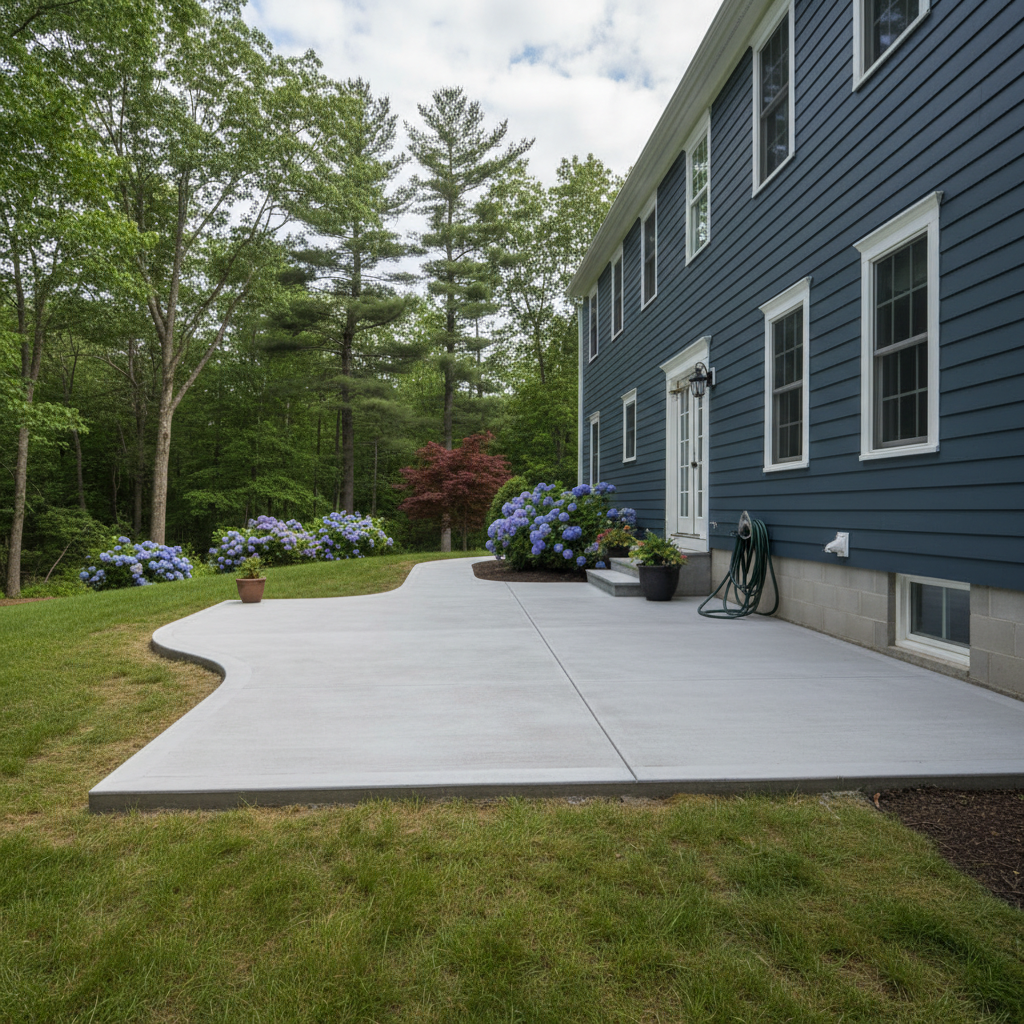
You want your concrete to last, right? Of course you do. Whether it's a new driveway, patio, or walkway, you've put your hard-earned money into it, and you expect it to hold up. The good news is, with just a little bit of care, you can really extend the life of your concrete here in Worcester.
Making Your Concrete Last Longer
The biggest enemy of concrete in our neck of the woods isn't necessarily heavy traffic or even a bad installation. Nope, it's the freeze-thaw cycle. Winter here in Worcester can be brutal, let's be honest. Temperatures swing wildly, water gets into microscopic pores in the concrete, freezes, expands, and then thaws. All that movement creates stress. And that stress is what eventually leads to cracking, spalling, and general deterioration over time. So, how do you fight it?
First off, sealing is huge. A good quality penetrating sealer, applied correctly, acts like a raincoat for your concrete. It doesn't just sit on top; it actually gets absorbed, filling those tiny pores. This makes it much harder for water to sneak in. I usually tell folks to seal new concrete within a year of installation, then every 2-3 years after that. It depends on the sealer type and how much abuse it takes, naturally. Don't skip this step – it's your concrete's best defense against our unpredictable winters.
Another thing to consider is proper drainage. You need to make sure water isn't pooling on or around your concrete. If you've got a low spot where water collects, that's a prime target for freeze-thaw damage. Sometimes it's as simple as cleaning out a gutter or extending a downspout. Other times, it might need a bit more grading work. But getting water away from your concrete? That's critical.
What Regular Upkeep Looks Like
Keeping your concrete in good shape isn't rocket science, but it does require a little attention. Here's what I tell my customers:
- Keep it clean: Sweep off dirt, leaves, and debris regularly. This stops organic matter from breaking down and staining the surface. A good power wash once a year (on a low setting, please don't blast it like you're stripping paint) can do wonders.
- Address spills immediately: Oil, grease, rust, or anything acidic can stain or even etch concrete if you leave it too long. The quicker you clean it up, the better your chances of preventing permanent damage.
- Be smart about de-icers: This is a big one for Worcester. Many common de-icers contain salts (like sodium chloride or rock salt) that are really harsh on concrete. They can speed up freeze-thaw damage and cause spalling. Look for de-icers labeled 'concrete safe' or just use sand for traction instead. Calcium chloride and magnesium chloride are generally better options, but even those should be used sparingly. Shovel early and often – that's your best bet.
- Watch for weeds: Weeds growing through cracks aren't just an eyesore; their roots can actually widen those cracks over time. Pull them out or use a weed killer.
Warning Signs of Trouble
You don't need to be a concrete expert to spot trouble. Just keep an eye out for these things:
- Hairline cracks getting wider: Small cracks are often normal, especially with our ground shifting from frost heave. But if you see them growing, or if they start to become uneven (one side higher than the other), that's a sign of a bigger issue.
- Spalling or flaking: This is when the top layer of concrete starts to chip or peel off. It's almost always because of water getting in and those freeze-thaw cycles, particularly if harsh de-icers have been used.
- Uneven surfaces: If a section of your driveway or patio has sunk or lifted, that tells you there's a problem with the sub-base or soil underneath. This is common in older homes around areas like Tatnuck or Burncoat, where the soil can be a mix of fill and natural clay.
- Pitting: Small holes or craters on the surface can be caused by aggregate popping out or by a chemical attack.
- Persistent staining: If you've cleaned a stain multiple times and it keeps coming back, it might be a deeper issue, or maybe your sealer is failing.
When to Call a Professional
Some things you can handle yourself, but for others, it's best to bring in someone who knows what they're doing. You should call a pro like us at Concrete Evolutions Co. if:
- You see significant cracking that's getting worse or causing a tripping hazard.
- There's widespread spalling or large areas of surface deterioration.
- Sections of your concrete have settled or lifted, creating uneven surfaces.
- You're noticing drainage issues that are contributing to concrete problems.
- You're considering a major repair or replacement.
Don't wait until a small problem becomes a huge, expensive headache. A quick assessment from an experienced contractor can save you a lot of grief and money down the road. We're happy to take a look and give you an honest opinion on what needs to be done.